The emergence of AI-powered chatbots has added a new dimension to customer service, providing efficiency, cost-effectiveness, and constant availability. However, the human touch in customer service remains invaluable, especially in markets like South Africa, where cultural nuances and personal connections significantly impact customer satisfaction. This article will explore the strengths and weaknesses of AI Chatbots vs. Human Service, focusing specifically on the South African retail industry.
Advantages of AI-Powered Chatbots
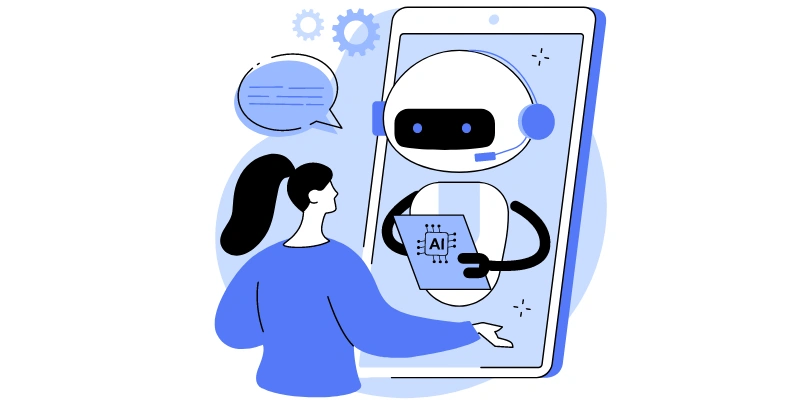
AI-powered chatbots have rapidly gained traction in the retail industry, offering several distinct advantages:
24/7 Availability for Customer Support
Ability to Handle Multiple Queries Simultaneously
Chatbots excel in multitasking. They can handle thousands of customer queries simultaneously without compromising on response time or accuracy. This scalability is a boon for retailers during peak shopping periods, such as Black Friday or festive seasons, where the volume of customer inquiries can overwhelm human agents.
Consistent and Standardised Responses
Consistency is key in customer service, and chatbots deliver just that. AI-powered chatbots are programmed to provide standardised responses, ensuring that every customer receives the same level of service. This uniformity is particularly useful in maintaining brand voice and reducing the chances of miscommunication, which can occur with human agents.
Cost-Effective Solution for Retailers
For South African retailers operating on tight budgets, the cost-effectiveness of AI Chatbots vs. Human Service is a significant advantage. Chatbots reduce the need for large customer service teams, cutting down on salaries, training, and overhead costs. Moreover, the initial investment in chatbot technology often pays off quickly through increased efficiency and customer satisfaction.
Disadvantages of AI-Powered Chatbots
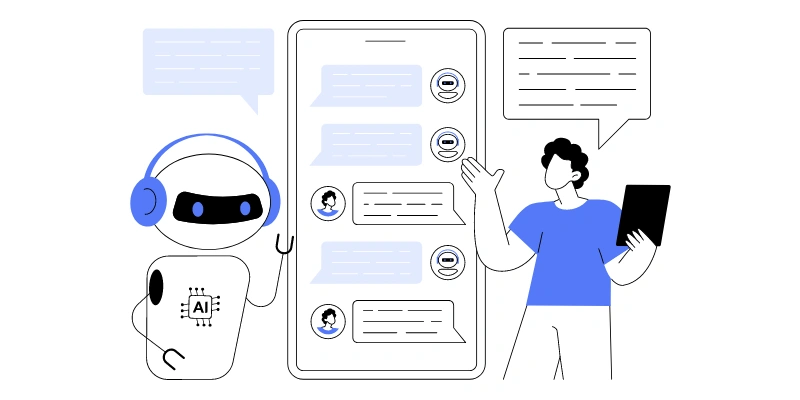
While AI-powered chatbots offer numerous advantages, they are not without their drawbacks:
Lack of Emotional Intelligence and Empathy
Chatbots, by their very nature, cannot understand and respond to human emotions. They are programmed to follow scripts and cannot deviate from their pre-set responses, which can lead to frustration for customers seeking a more empathetic and understanding interaction.
Limitations in Handling Complex or Nuanced Customer Queries
Chatbots are designed to handle straightforward, repetitive tasks. However, when faced with complex or nuanced queries, they often fall short. This limitation can lead to customer dissatisfaction, especially in cases where the customer requires detailed explanations or bespoke solutions.
Potential for Technical Errors and Misinterpretations
Technical errors are another significant disadvantage of chatbots. Misinterpretations of customer queries due to ambiguous language or technical glitches can result in incorrect responses, further aggravating the customer. These errors can be particularly detrimental in a market like South Africa, where customers expect reliable and accurate service.
Risk of Frustrating Customers with Pre-Programmed Responses
The reliance on pre-programmed responses can be a double-edged sword. While it ensures consistency, it also means that chatbots can come across as robotic and impersonal. Customers who are dealing with specific issues may find these canned responses frustrating and unhelpful, leading to a negative perception of the brand.
Advantages of Human Customer Service

Despite the rise of AI, human customer service remains a cornerstone of the retail industry, offering benefits that technology cannot replicate:
Emotional Intelligence and Empathy in Communication
Human agents bring emotional intelligence and empathy to customer interactions, which are essential in resolving issues and building customer trust. South African customers, in particular, value personal connections and the ability to engage with a representative who understands their emotions and can respond accordingly.
Complex Query Handling and Problem-Solving Abilities
Human agents are better equipped to handle complex queries that require critical thinking and problem-solving skills. While chatbots are limited to pre-programmed responses, human agents can think outside the box and provide solutions that are tailored to the customer’s unique situation.
Personalised Customer Interactions
Personalisation is a significant advantage of human customer service. Human agents can adjust their communication style based on the customer’s tone, mood, and preferences, creating a more personalised and satisfying experience. In South Africa, where customers may speak multiple languages and have different cultural backgrounds, this ability to adapt is crucial.
Ability to Understand and Adapt to Customer Emotions
Understanding and responding to customer emotions is a skill that human agents excel at. They can detect frustration, anger, or confusion in a customer’s voice or text and adapt their approach to de-escalate the situation. This emotional responsiveness is something that AI, despite advancements, still struggles to replicate.
Disadvantages of Human Customer Service

Human customer service, while valuable, also has its drawbacks:
Higher Operational Costs for Retailers
Employing a team of human customer service agents is expensive. Retailers must account for salaries, benefits, training, and other overhead costs, which can add up quickly. For South African retailers operating on slim margins, these costs can be a significant burden.
Limited Availability Compared to AI-Powered Chatbots
Unlike chatbots, human agents cannot work 24/7 without breaks. This limited availability can be a drawback, particularly for customers who need assistance outside of regular business hours. In a global market, this can lead to missed opportunities and customer dissatisfaction.
Variability in Service Quality Based on Individual Representatives
The quality of human customer service can vary widely depending on the individual agent. Factors such as mood, fatigue, and personal biases can all impact the level of service provided. This variability can lead to inconsistent customer experiences, which can harm a retailer’s reputation.
Potential for Biases and Errors in Judgment
Human agents are not immune to biases and errors in judgment. These biases can affect how they handle customer interactions, leading to unfair treatment or incorrect resolutions. In South Africa, where diversity is a hallmark of the population, these biases can have significant consequences if not properly managed.
Comparison of AI Chatbots vs Human Service
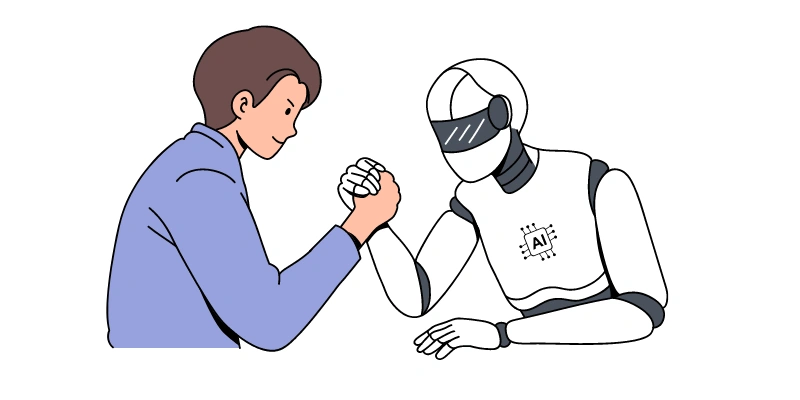
When comparing AI Chatbots vs Human Service, several factors come into play:
Cost-Effectiveness
AI-powered chatbots are undoubtedly more cost-effective than human customer service agents. They reduce the need for large teams and can operate around the clock without incurring overtime or additional expenses. However, the initial investment in chatbot technology can be high, and ongoing maintenance is required to keep the system up to date.
Customer Satisfaction Levels for AI Chatbots vs. Human Service
Customer satisfaction is a mixed bag when it comes to AI Chatbots vs Human Service agents. While chatbots are efficient and consistent, they often lack the personal touch that many customers desire. Human agents, on the other hand, can provide more personalised and emotionally intelligent service, but their availability and consistency may vary.
Operational Efficiency
In terms of operational efficiency, chatbots have the upper hand. They can handle large volumes of queries simultaneously, ensuring quick response times and reducing the workload on human agents. However, their inability to handle complex queries means that human agents are still needed for more detailed customer service tasks.
Impact on Brand Reputation
The impact on brand reputation is perhaps the most significant factor for South African retailers to consider. A well-implemented chatbot can enhance a brand’s reputation for efficiency and modernity. However, if the chatbot fails to meet customer expectations, it can damage the brand’s image. Human agents, while more costly, can build stronger customer relationships and foster loyalty through personalised service.
In conclusion, the debate between AI Chatbots vs Human Service is complex, but for South African retailers, it’s about finding a balance. Chatbots can handle routine queries and provide 24/7 support, while human agents can manage more complex or emotionally charged interactions. As technology evolves, combining the efficiency of AI with the empathy of human agents will be the key to exceptional customer service. Retailers looking to further integrate AI into their operations should explore strategies like Leveraging AI for Personalised Marketing Campaigns in South African Retail.
Additionally, considering tools like. Retail AI 360 for AI-Driven Stock Management with can complement customer service efforts, enhancing operational efficiency and ensuring that inventory levels align with customer demands. The future of customer service in South Africa’s retail sector lies in how AI and humans can work together to elevate the overall customer experience and maintain a competitive edge in the market.